
24 Special Invited Artists, for 2026 event.
Frances Hatch
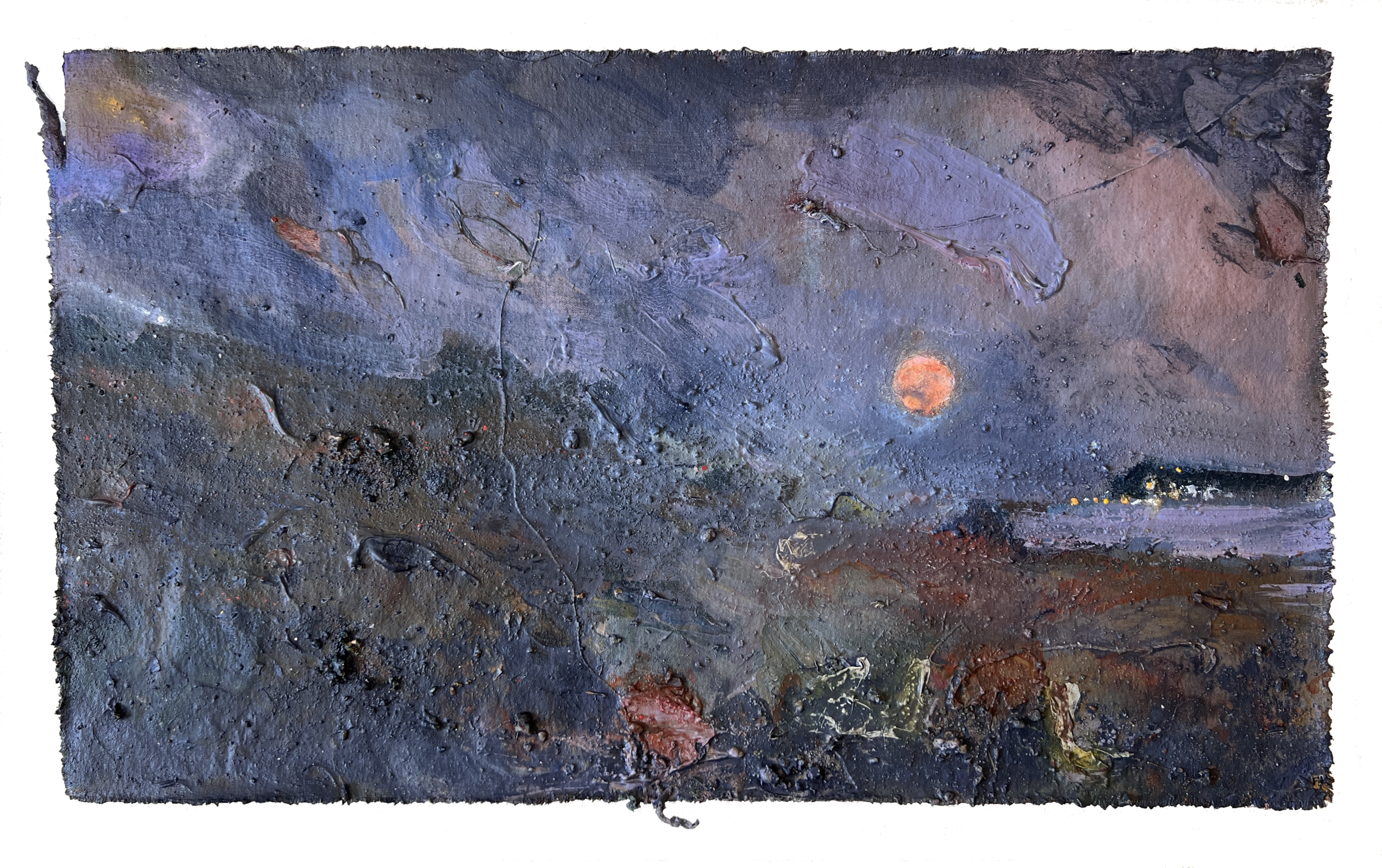
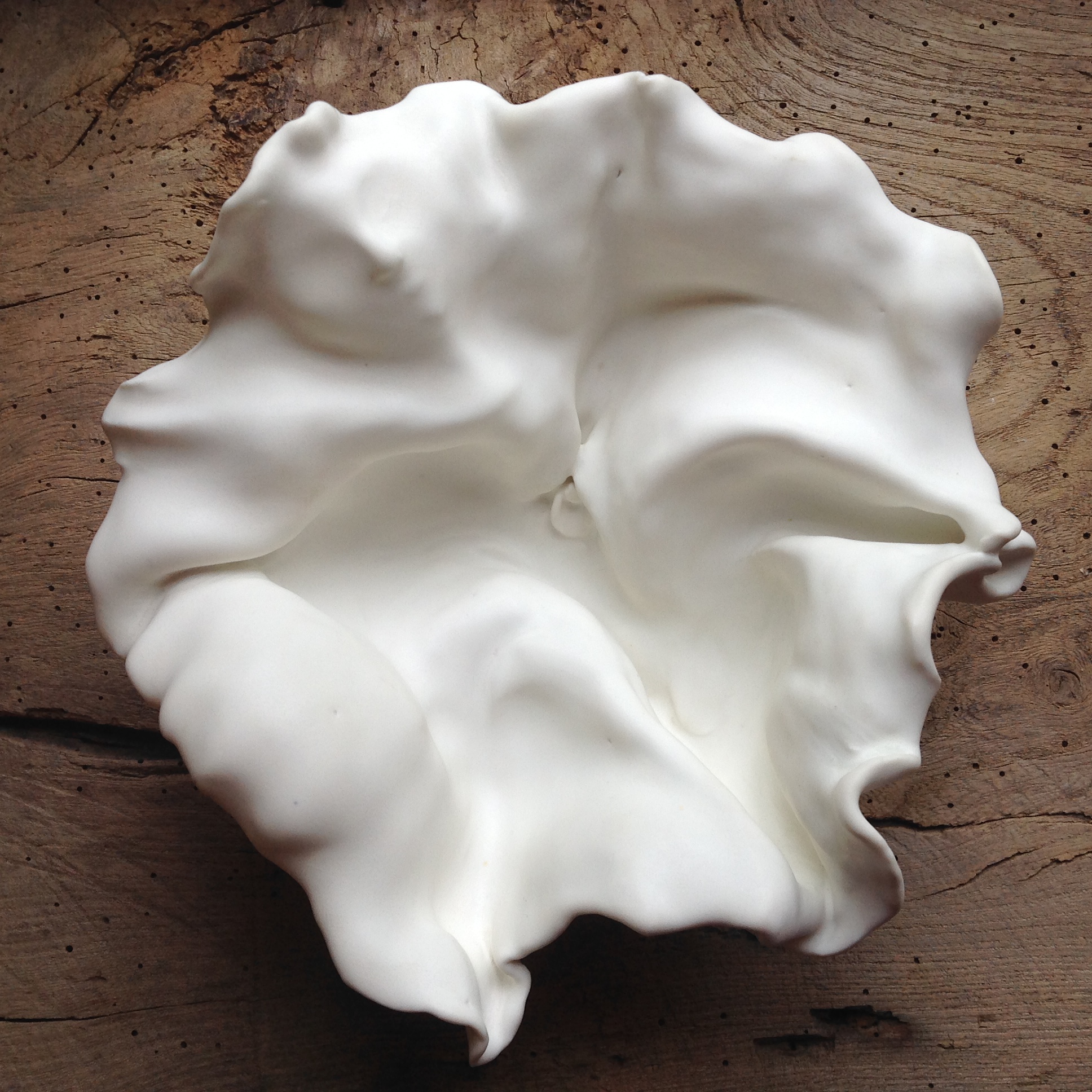
Mackerel Moon. West Bexington. Looking towards Portland. Site materials and acrylic on canvas fragment. 49x83cm framed
Frances works out of doors, in and with nature. Her work arises out of relationship with any environment in which she spends time. She uses water-based paints and integrates them with locally sourced, foraged earths. Her paintings arise out of conversation with the land and as a result of teamwork with weather. They become containers of experience with ‘Nature herself as the primary text.’ (words by Thomas Berry)
Enduring themes expressed in Frances’ work and life are reflected in titles of recent shows:
OF TRUTH OF WATER. Brantwood, Coniston Water, Cumbria.
COMMON GROUND. RWS Gallery, London.
RESTLESS EARTH. Sladers Yard, West Bay. Dorset.
She is an elected member of the Royal Watercolour Society.
Richard Pikesley
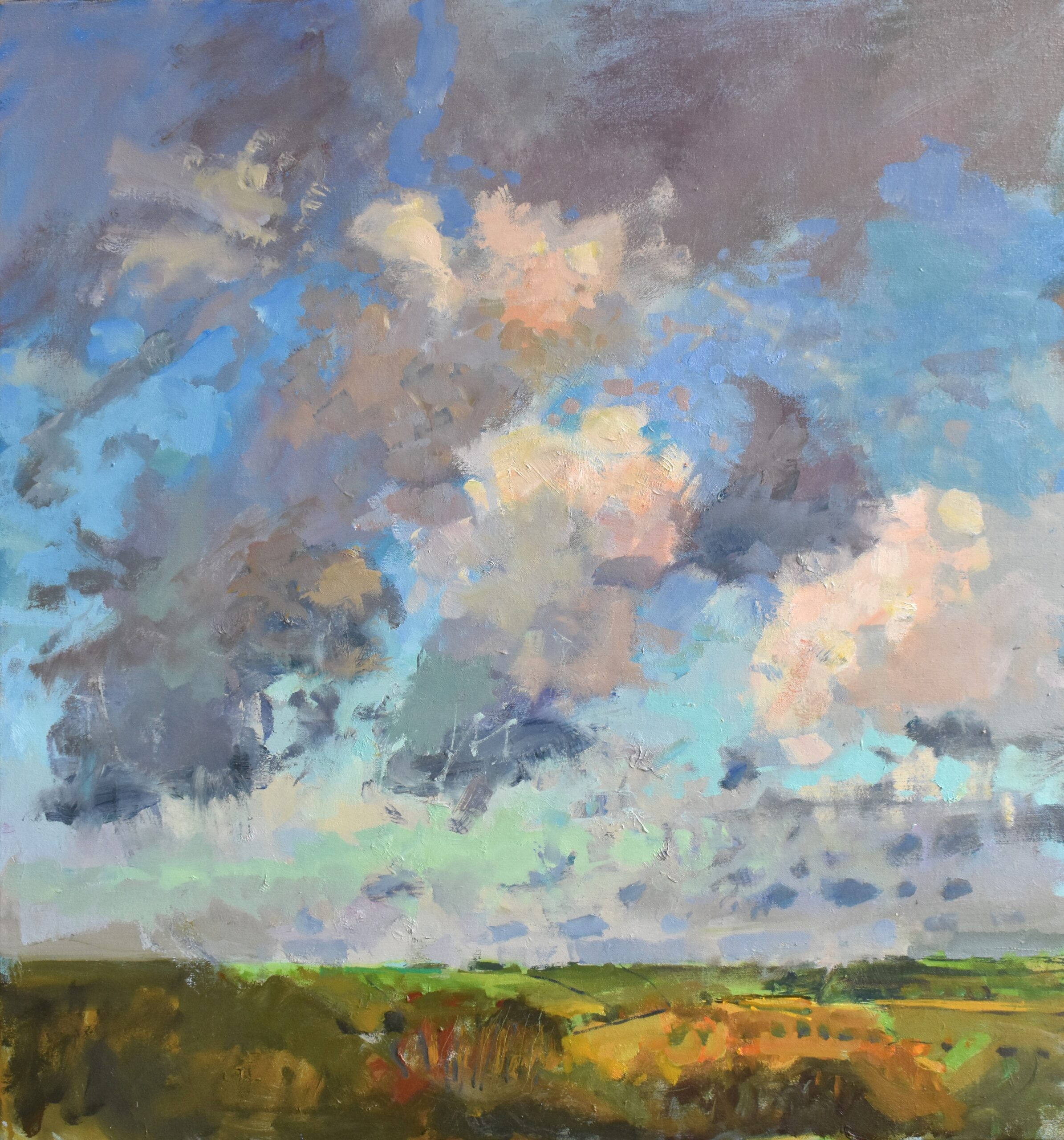
” Painting is a conversation with the visual world and starts with painting in front of the subject. My painting starts with an immediate response. Seeing, perhaps, an effect of light which really grabs my attention, the first step will usually be a painting – made fast enough to get the moment down. After years of working with oil paint and watercolour, their familiarity means I can rely on working quite instinctively at this stage. The moment passes and I usually need more information especially if I feel it could become a bigger painting. The next stage will often be to make a more considered drawing, which might take many hours. Bigger paintings might be started in the studio and when practical taken back to the location and completed on the spot.”
Richard lives in West Dorset, is an elected member of the Royal Watercolour Society and the New English Art Club.
Michael Weller
.
Michael Weller
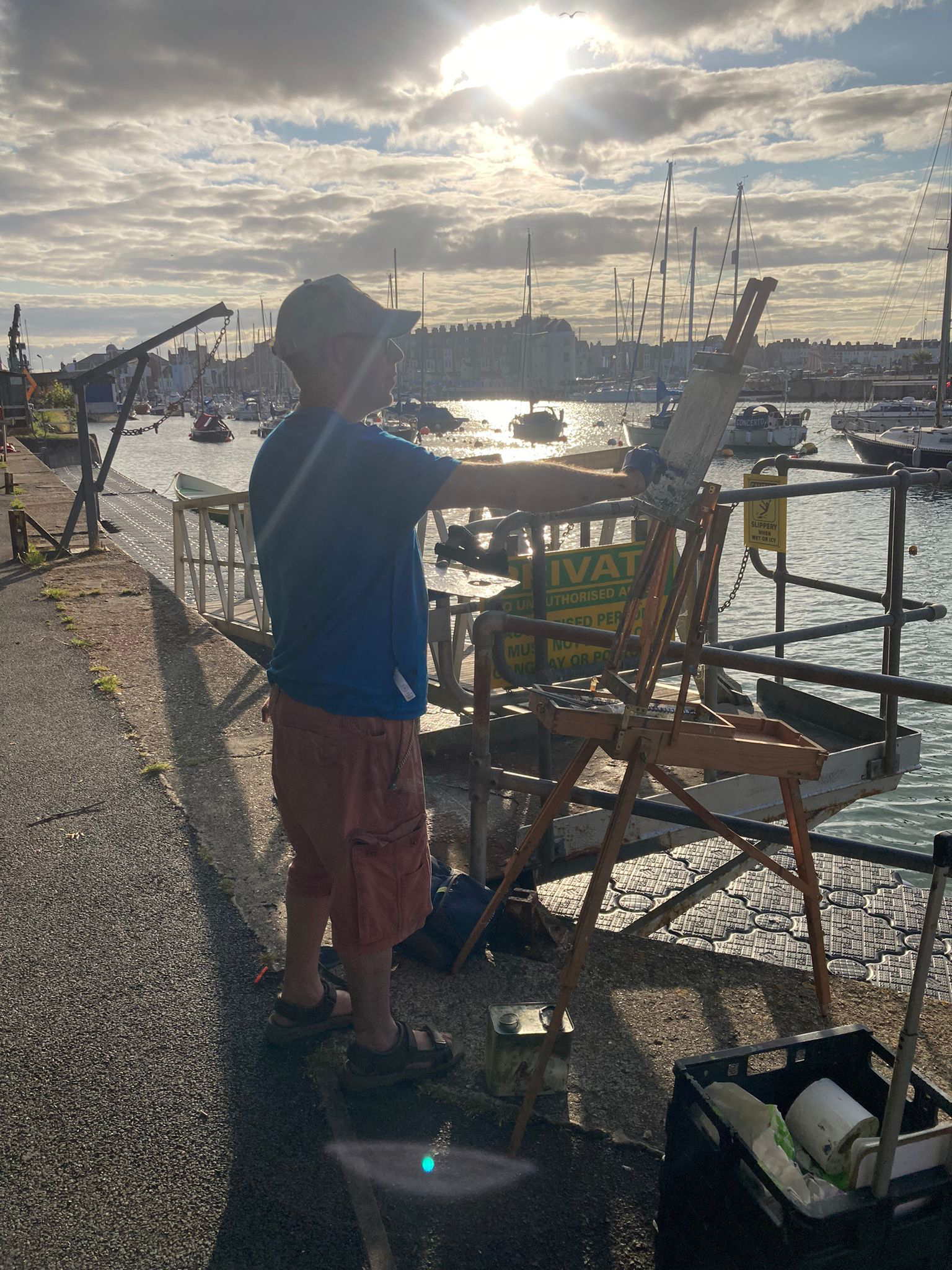
Michael is a traditional painter who likes to paint from life. He grew up in Bournemouth and Winchester. He studied librarianship in Manchester and realised early on he didn’t want to be a librarian. Going to life-drawing classes cheered him up a bit. He did a degree in Fine Art then studied portraiture.
He paints things around him at home, oranges, apples, a blue mug, a milk bottle, a packet of coffee. He moves them round till he wants to paint them. After moving to Dorset in 2023, he started to paint outside again.
He’s represented by Tregony Contemporary in St Mawes, Cornwall, and GrandyArt in London. The New English Art Club elected him to membership in 2022. He teaches for the NEAC, Winslow Art Center and ArtDrawPaint.
Fiona Sansom
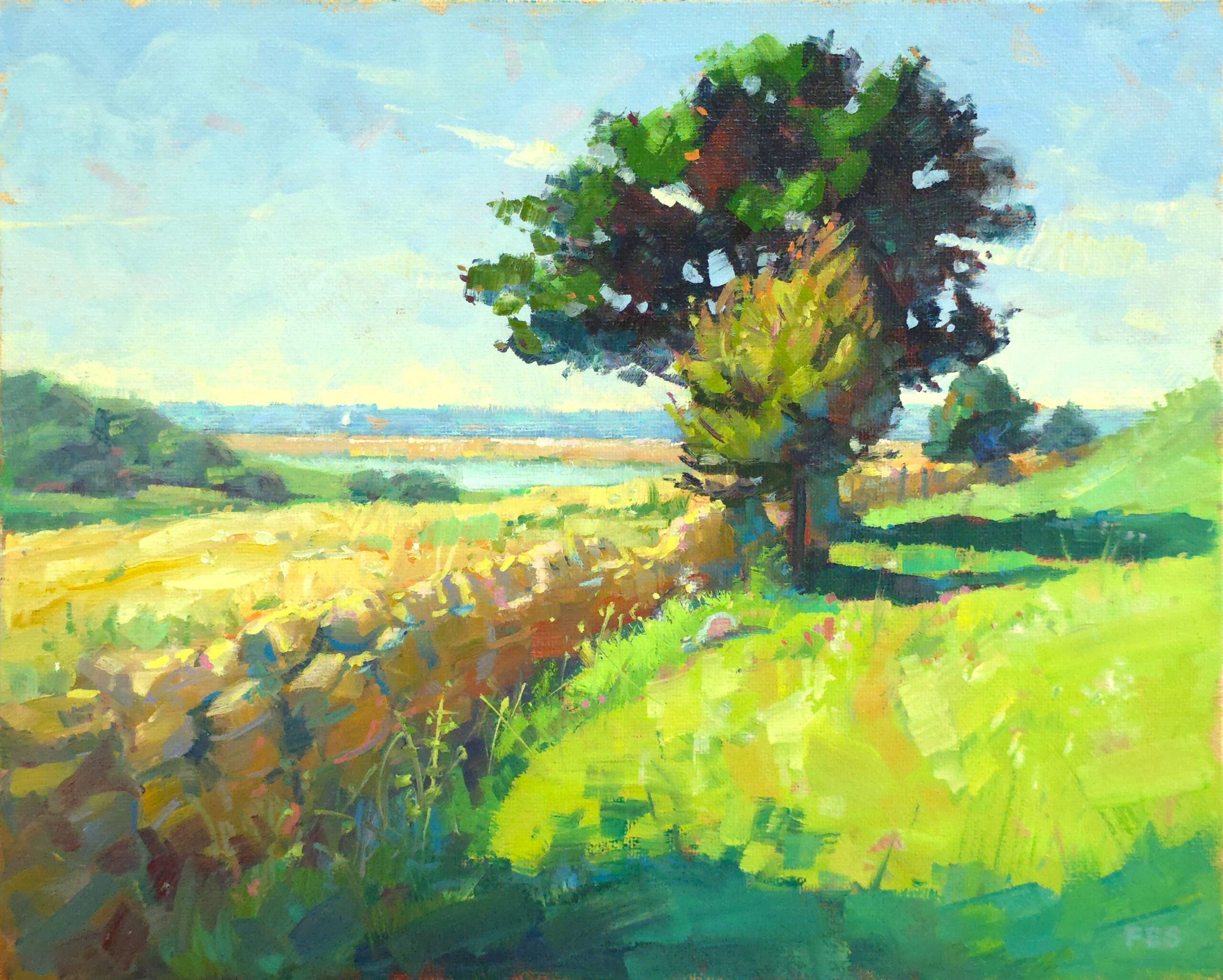
Fiona Sansom is an artist living and working in both London and Dorset. Fiona studied Illustration at Kingston University in London and worked as a freelance illustrator before stopping to pursue her interest in fine art. Her art explores colour, form and light, creating lively images. She is drawn to many subjects, but she finds working from life or en pleinair the most stimulating. She works mostly in oil in a wet on wet technique, but also likes to work in mixed media of ink, acrylic, watercolour/gouache and pastel. She currently participates in many groups of pleinair painters and is a member of several art societies.
Helen Simpson
Quentin Martin
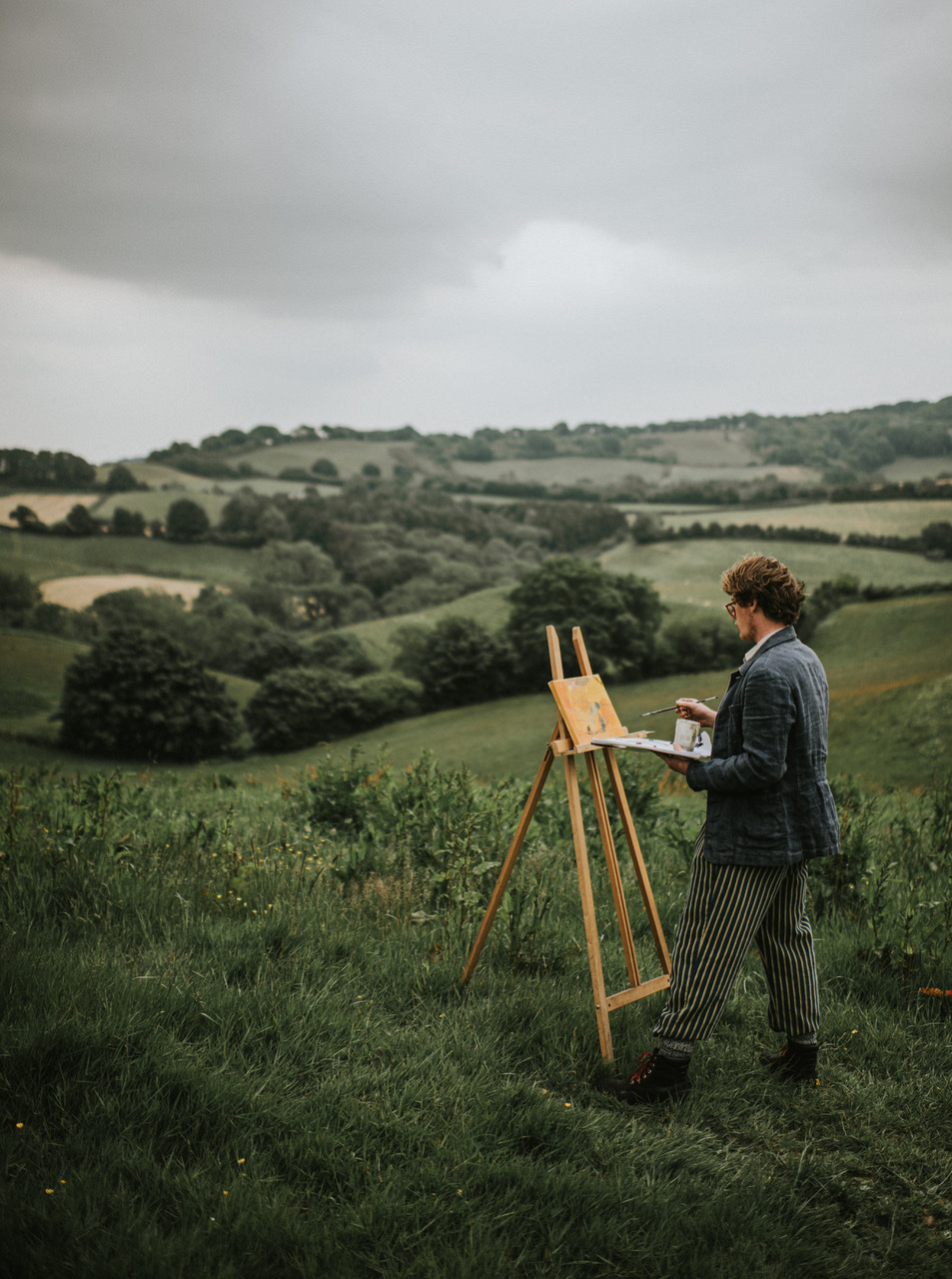
b.1996, is a painter and architectural designer. Working mostly in oils, his subjects mainly include landscapes as well as still life and people. After his first joint exhibition for the Beaminster Festival in 2011, at the age of 15, Quentin went on to receive art scholarships to Perrott Hill, Bryanston, The Architectural Association, The Essential School of Painting and The Royal Bath and West Show. Quentin recently graduated with an Architecture MA from the Royal College of Art. He also teaches painting and drawing privately.
The urban and rural landscape has been a captivating subject of Quentin’s for some time. Whilst feeling an inclination towards natural subjects, Quentin enjoys finding moments where human intervention has a presence in the landscape. The particulars which define the difference between urban and rural green space – the nature of gardening, the spaces between plants or presence of certain abiotic or biotic elements – are all avenues of exploration for his painting.
Produced en plein air, the work is as much about the journey, in search of the subject, as it is the subject itself. The paintings therefore exist as unique reactions to expedition and place. Quentin is a colourist who uses composition and an enhanced palette to suggest other ways of reading the landscape; extracting the ultimately abstract qualities from within the figurative subject.
Claudia Dharamshi

There is calligraphic liquidity in her figurative and abstract forms and brushed shapes. A spontaneous fluid sketch process enlivens her work. Expressive and energetic mark making are characteristic of her work. Her plein air paintings are interpretations and often include an element of imagination. She aims to share her sensation of a space with the viewer.
Moby Hill

The themes of nature, birds and animals in views and vistas permeate his work. His personal painting practise is in the spirit of a contemporary vision, espousing line and symbolism. Moby’s compositions sit comfortably beside recently published ingenious poetry.
He studied Fine Art at Camberwell and Southampton.
Rachel Sargent
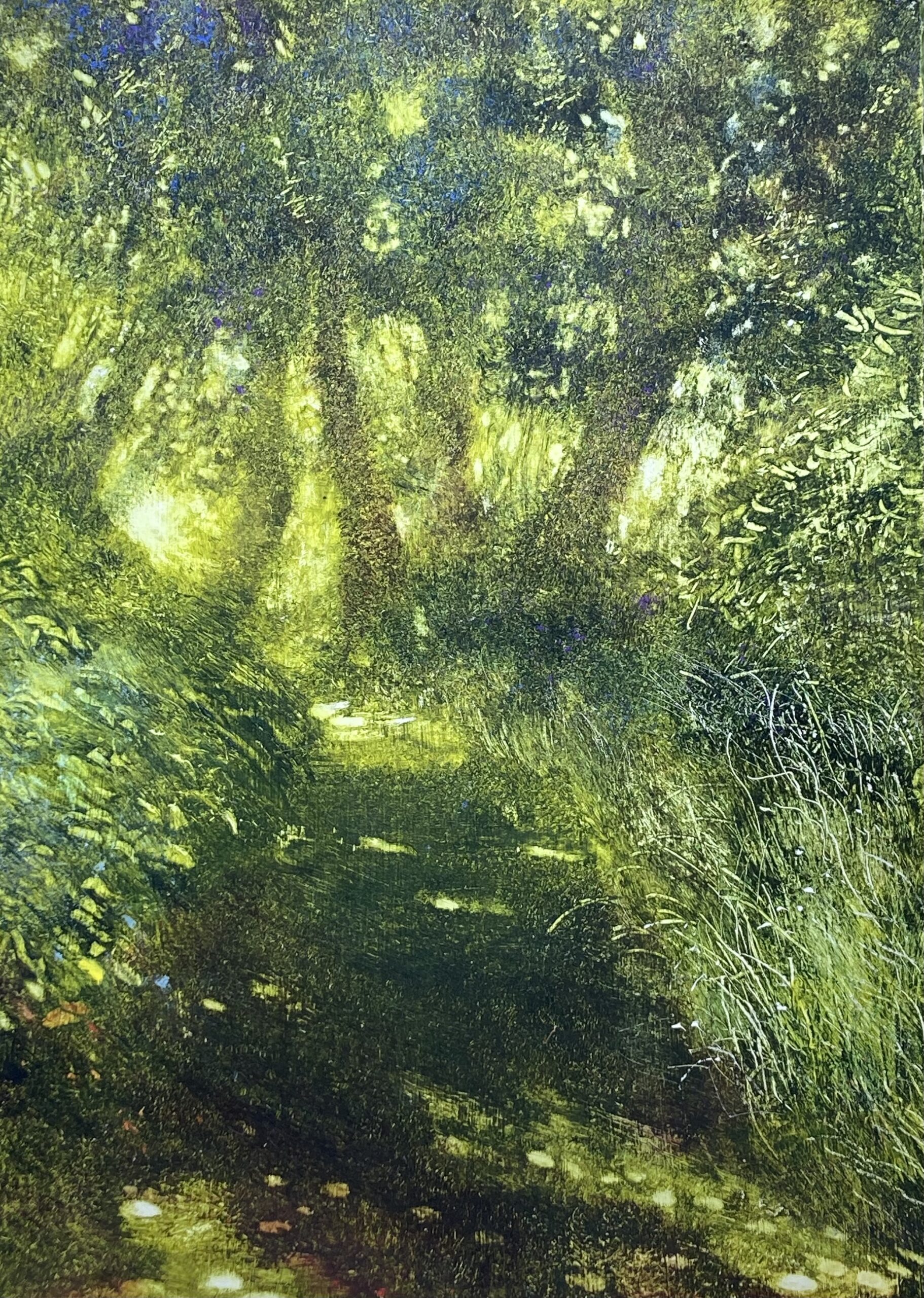
“From a converted cowshed in north Dorset, Rachel’s studio looks out on the prehistoric hill fort of Hambledon Hill. From there she can explore many of the ancient tracks, footpaths and holloways that she loves and is inspired by. Light and ambience in nature are her constant themes. Walking and revisiting the same places in all
weathers, seasons and times of day gives her endless references.I feel so lucky to live in Dorset and be able to access so many beautiful places. Walking and revisiting the same places in all weathers, seasons and times of day give me endless references.”.
Mike Chapman
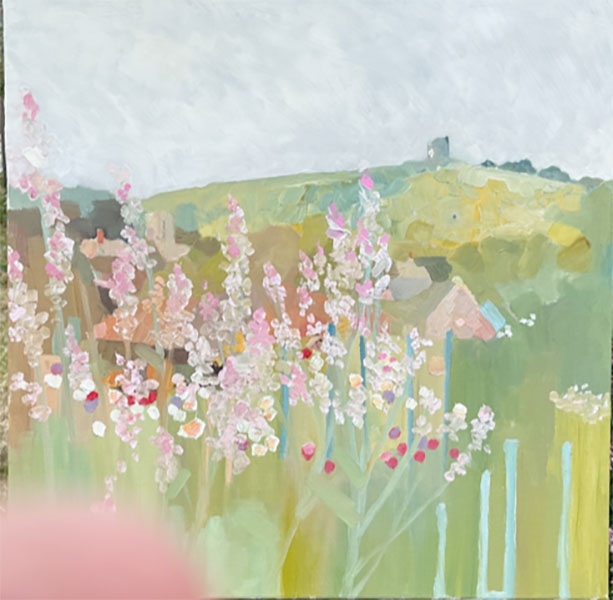
Mike has a sculpture on the steps of St. Martins in Trafalgar Square as well as in a Dorchester public street and a life sized carved wooden horse in the Hospital.
“Having spent 25 years, as a stone carver and sculptor; my work has gradually evolved into a more 2 dimensional form.
I now spend most of my time in a tiny studio at my home in Somerset, painting and drawing.
Mostly I’m moved by observations of people, but occasionally I venture into the great outdoors in an attempt to capture some of its magnificence. This, I really enjoy”.
Judy Tate
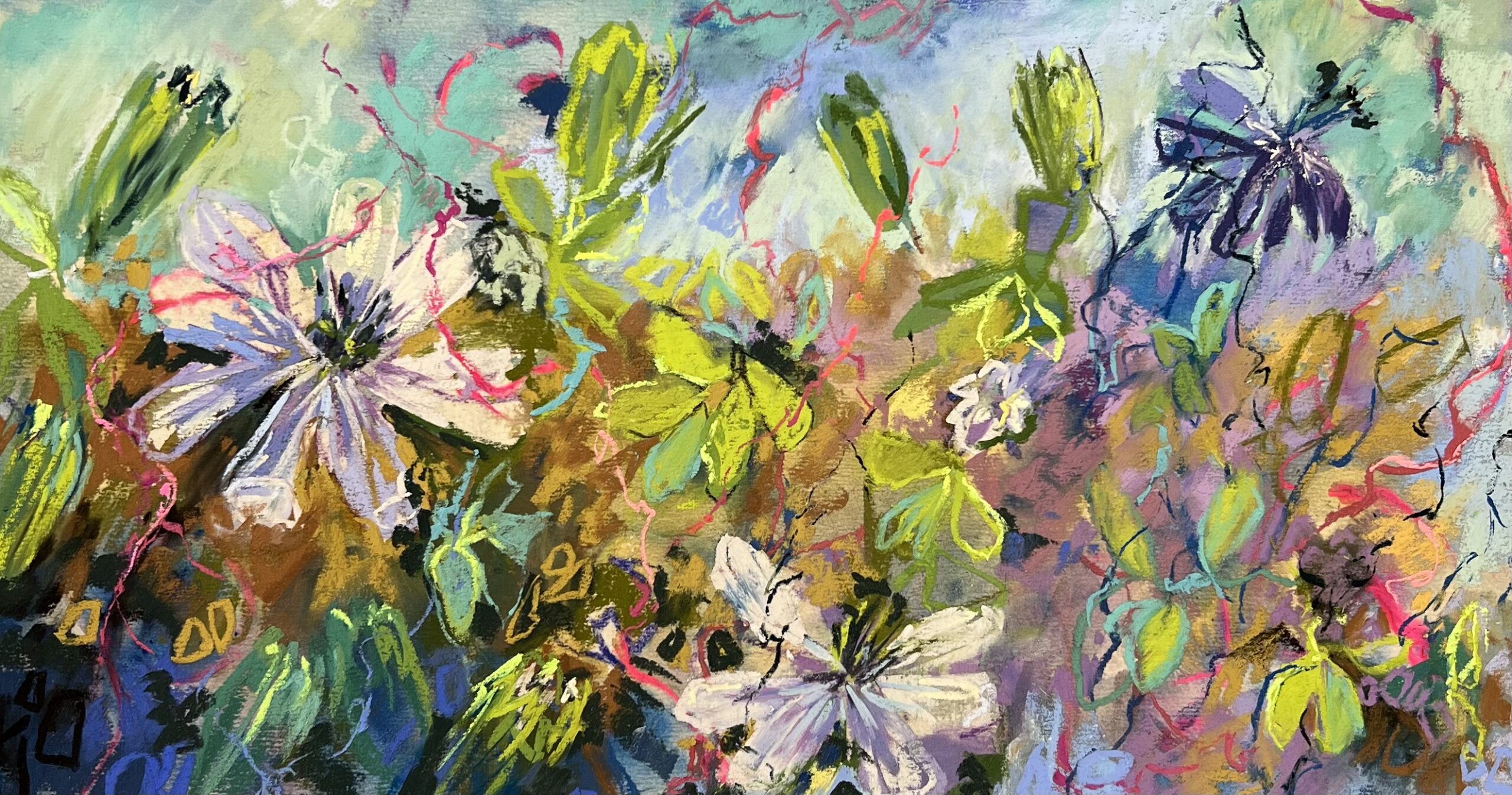
En plein air sketching and painting has given Judy a platform for larger pastel work in the studio. Sketchbook travelogues are an ongoing source of inspiration.
Studio based work is often inspired by flowers and seed heads and is increasingly of a more abstract nature. Her studio work now seems to be combining the two branches of her work practice, with the recurring motif of ‘ beyond ‘ and ‘behind ‘ often with paths going into infinity.
A range of her work can be seen on her website.
Sue Fawthrop
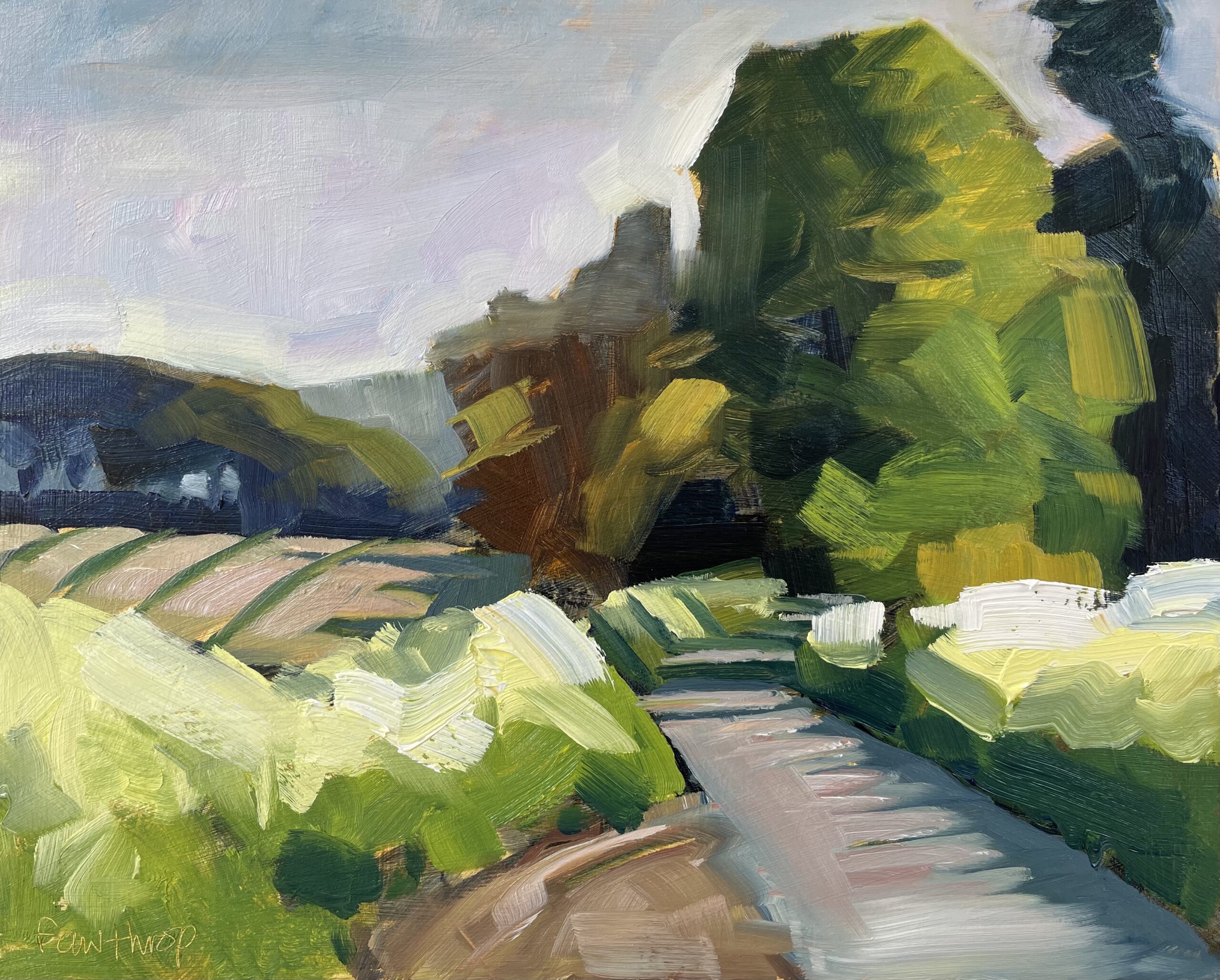
I’ve drawn and painted most of my life, flirted with many ways of making an image and finally settled on painting out of doors, directly from the landscape.
Plein air painting is a delicious thing to do. Trying to capture one elusive ray of light as it hits a particularly bright field in the distance, while hanging on to your hat and easel in a high wind is exciting. You can’t work too carefully if the brush is bouncing on the surface, and the struggle against the elements comes through in the energy of the piece.
I love the smell of the paint, the light, the weather, the fact that everything is in constant flux. This is infused in the work, along with small insects, bits of grass, windblown sand and, occasionally, a complete rework as everything has blown over and landed facedown (of course) in mud.
My aim is to create as much air and depth as possible on a small surface, working quickly and using big brushes and broad strokes to distill the scene without losing its essence. Since the length of time spent on a piece is limited by the changing light, I establish the main elements as quickly as possible and try not to pass over any area of paint more than twice. I am drawn by strong areas of contrast, especially light and shade and keep detail to a minimum.
My subjects are landscape, coast and countryside, mainly of Dorset
Debra Royston
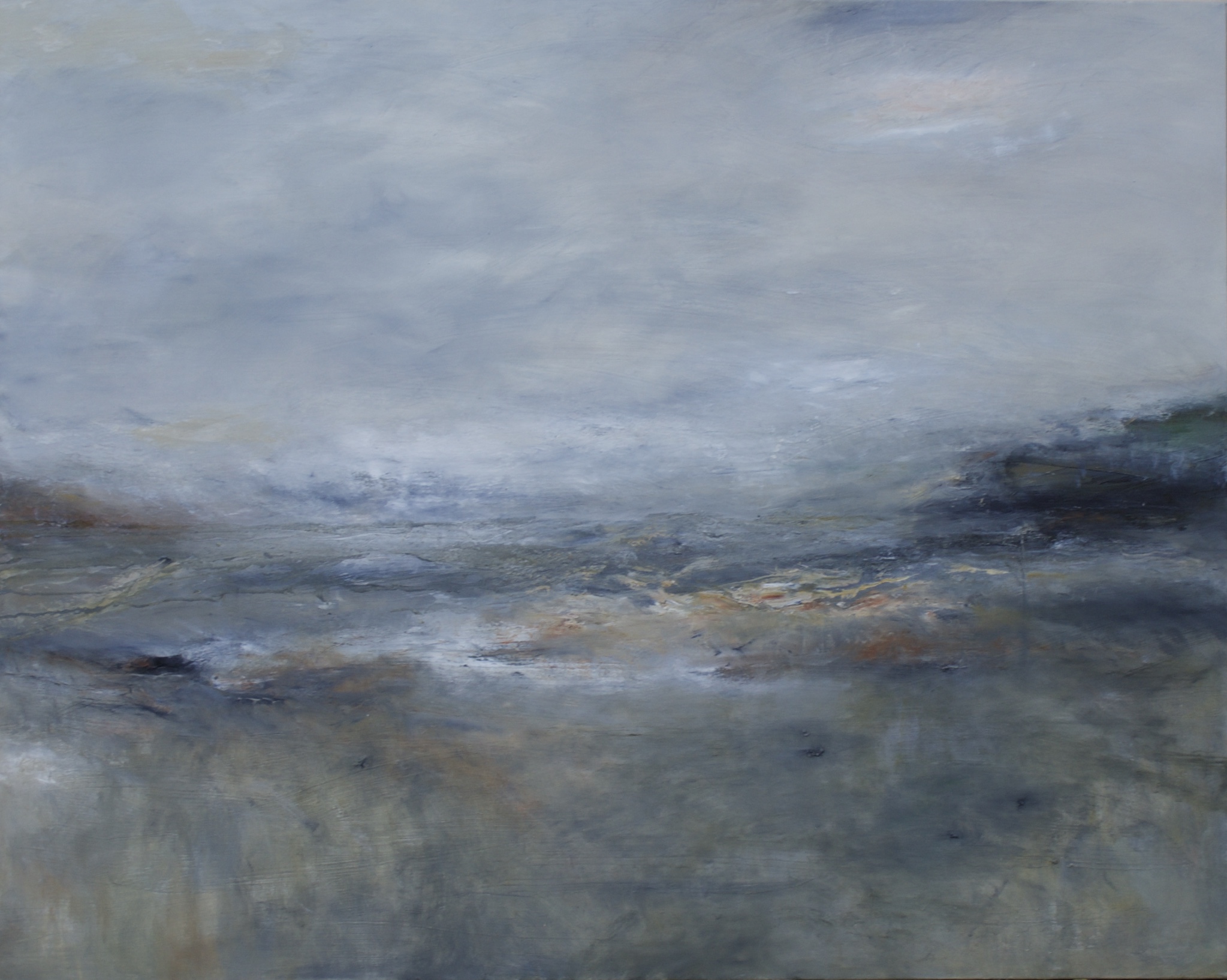
My inspiration comes from emotional responses, always searching to create work where others can perhaps begin to recognise themselves.
I paint to understand what I am thinking. The paintings reflect an internal landscape, created through processes of emotional reflection, primary expression and sensory stimulation. I often use nature as a starting point. The depth of natural stimuli requires me to work backwards into myself to forge a representation. The representation must ask questions of myself and the viewer; a time, a place, a person, a feeling. Or perhaps just a simple moment of reflection.
I paint instinctively and intuitively. I often mix colours straight onto the canvas and revel in the process of the unexpected, absorbing each colour and mark as it takes its place within the canvas – like an old wall revealing its story.
I work on a painting constantly building then scraping away, like sculpting the surface of the canvas – sometimes making sense and then moving into an unexpected direction to deconstruct a scene or to capture the essence of a feeling or moment.
Jonathan Greenup
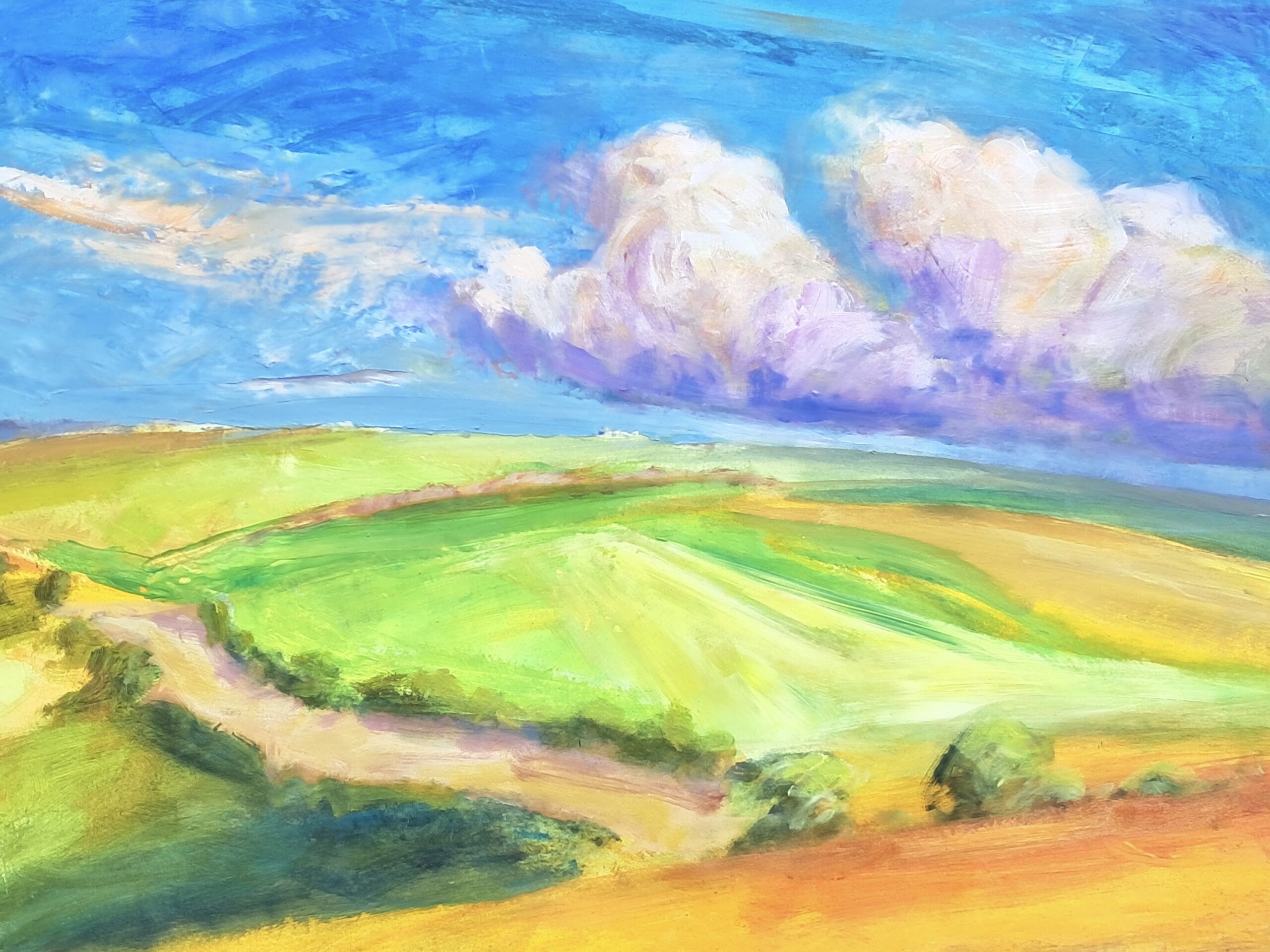
Jonathan Greenup’s art has been developing since it’s genesis fifty years ago.
Although mostly self taught, he also trained at Shelley Park (Bournemouth College of Art) and latterly at Abbotsbury Studio shaping both his craft and vision.
Jonathan is an avid sketcher, recording daily life as both documentation and as source material for his work.Not a great leap then for him to paint en plein air in oil using his much valued pochard box.
Inspired by his native Dorset he is to be found amid the rolling hills or by the famous coastline seeking elusive compositions.
When working on location Jonathan aims to convey the light and rhythm of nature in a direct yet spontaneous way.
He employs dynamic brushstrokes and inspired colour combinations in his landscapes to express mood and feeling.
Taking his lead from many expressionist artists,Jonathan delights in the physicality of paint.He is often directed by the subconscious in his mark making,straddling a tightrope between freedom and discipline.
The resultant work resonates in an unusual way and invites further contemplation.
Clare Hawkes
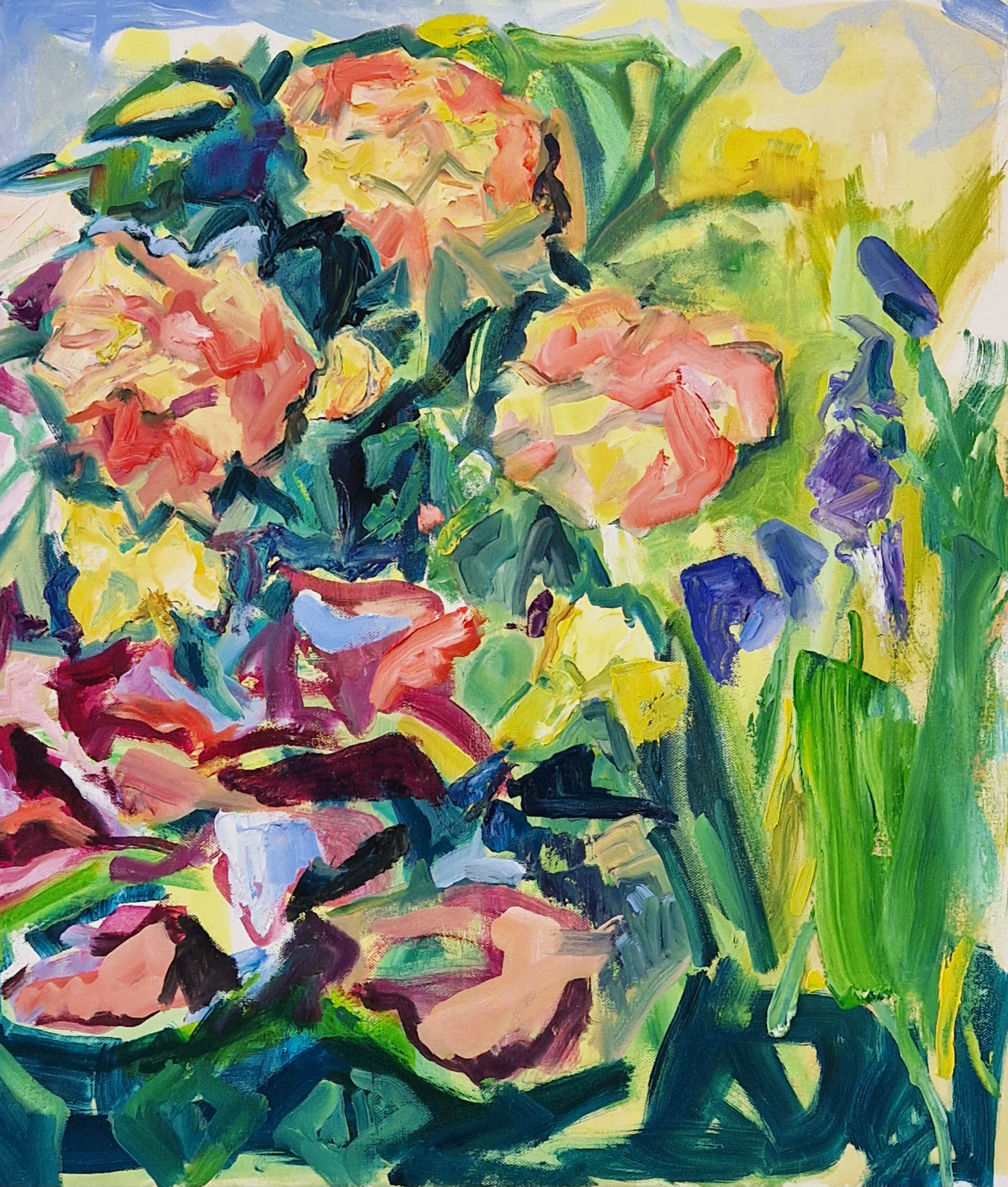
She studied at the Arts University Bournemouth and has a Fine Art Studio/Gallery at Abbotsbury in the Abbey Farm Workshops.
Ian Liddle
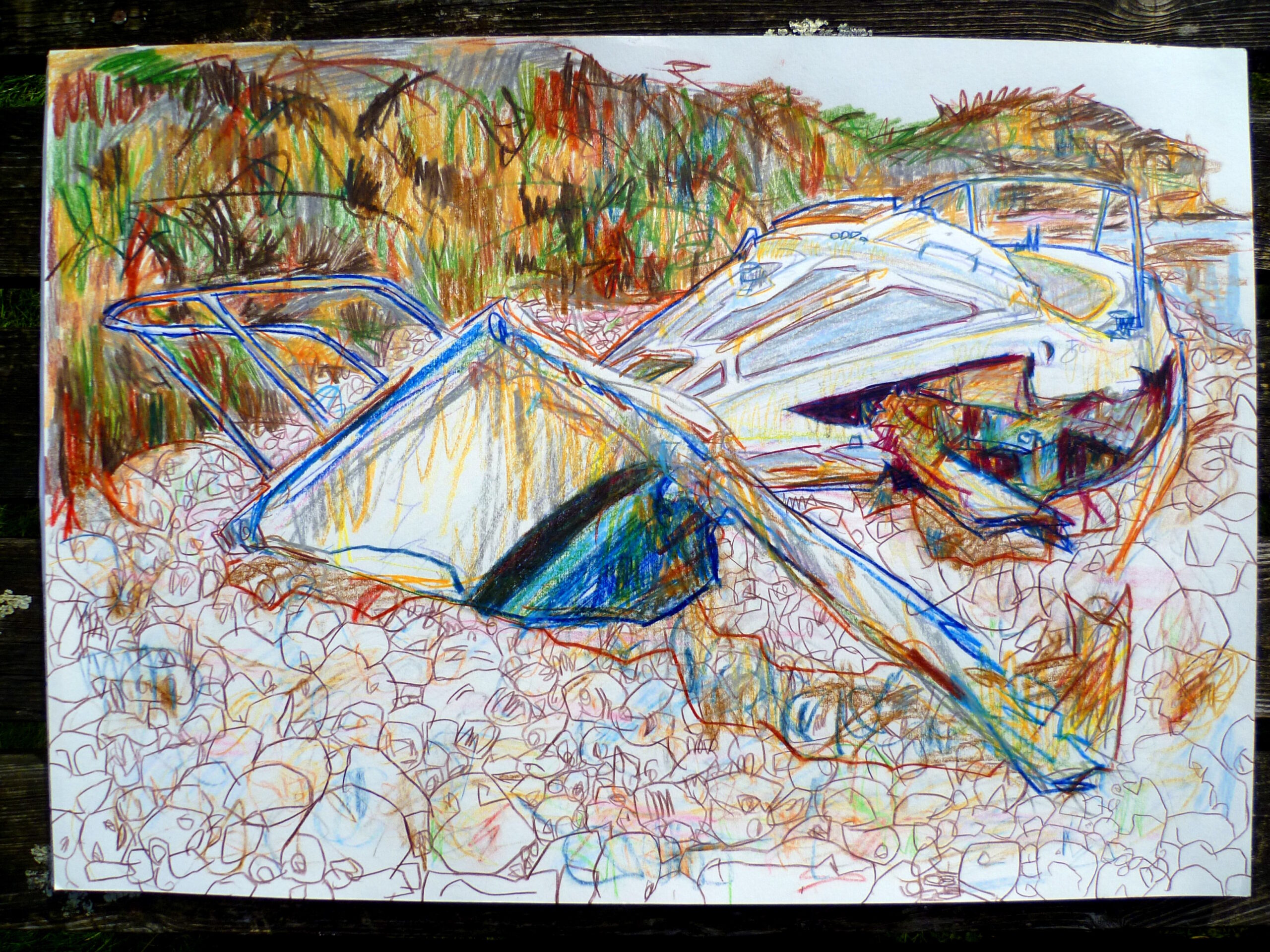
His work is recognisable by its use of a palette of bright sharp clean colours with spontaneously made clean shapes.
Fiona Godfrey
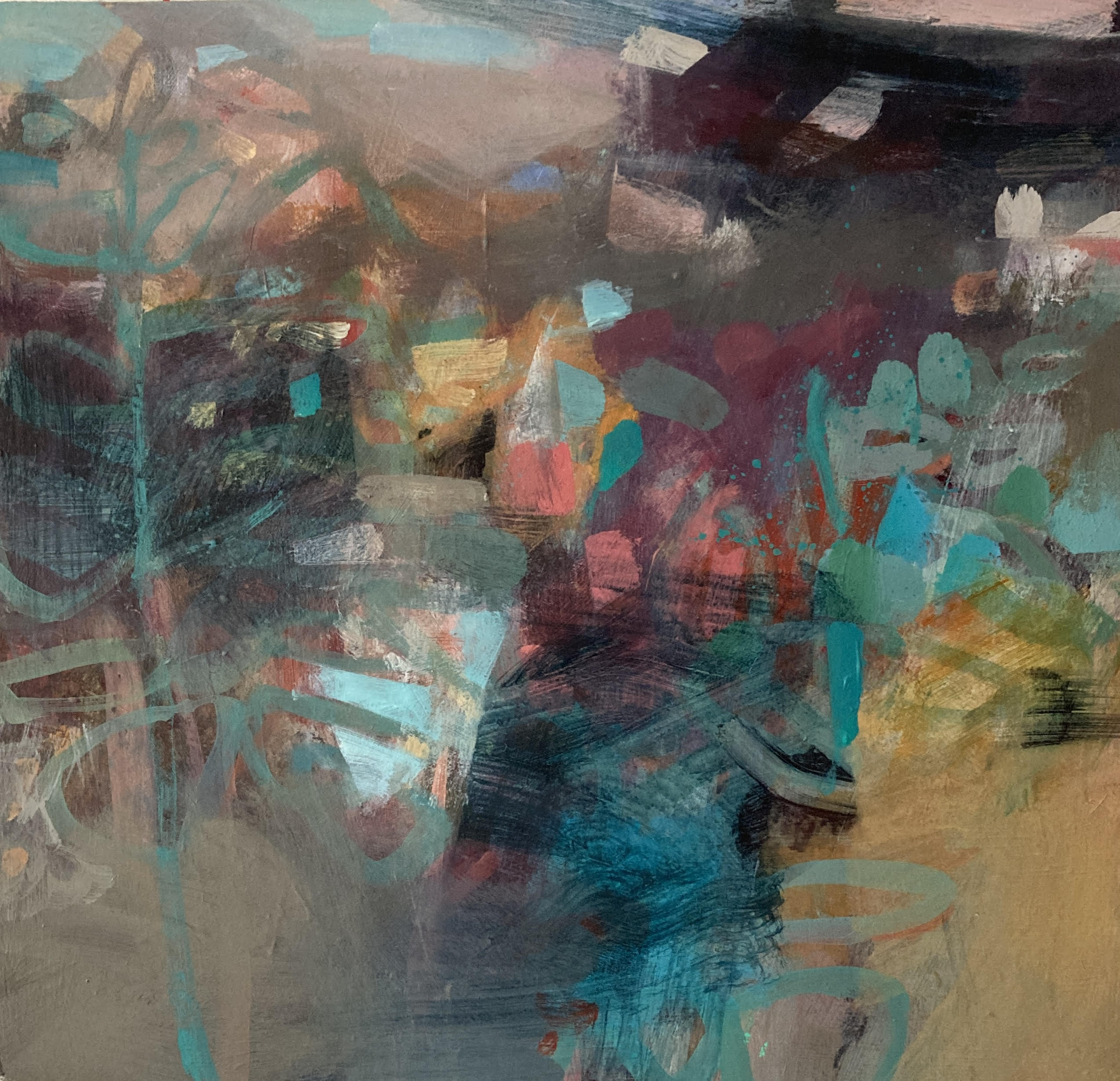
Fiona lives and works in Bridport, balancing a busy psychotherapy practice with making time to paint in and from the local landscape. A sabbatical on a Scottish Island ignited her current painting practice, while living in the Cambrian mountains in Wales during lockdown afforded her time for sketchbook walks and studio experiments. “Painting for me is a vital and all consuming immersion in the natural world and an escape into the infinite joys of colour and texture.”
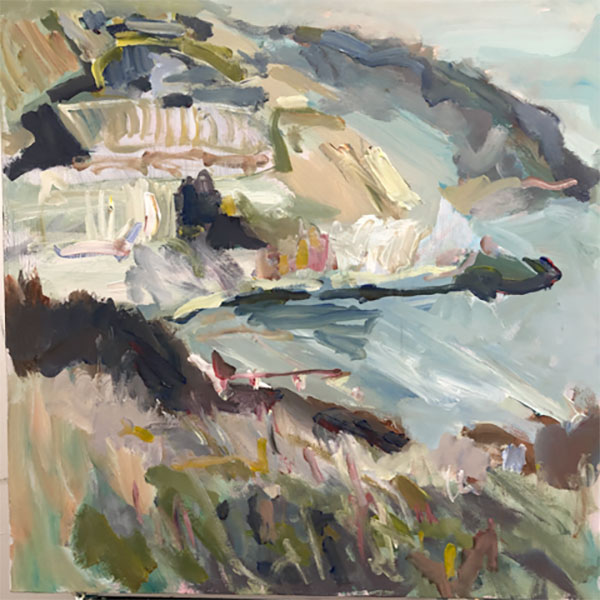
After studying at Weymouth College, last year Kim completed her BA Fine Art at Bath Spar University
James Meiklejohn

His portraits have been exhibited in the BP Portrait Award at the National Portrait Gallery and the Royal Society of Portrait Painters. In Dorset, his work has been shown at the Jerram Gallery, Sherborne and Sladers Yard, West Bay.
He has been teaching life drawing, portraiture, and oil painting for many years most recently for Dorset Centre for the Creative Arts and The Dorset Museum.
Lucy Hawkins
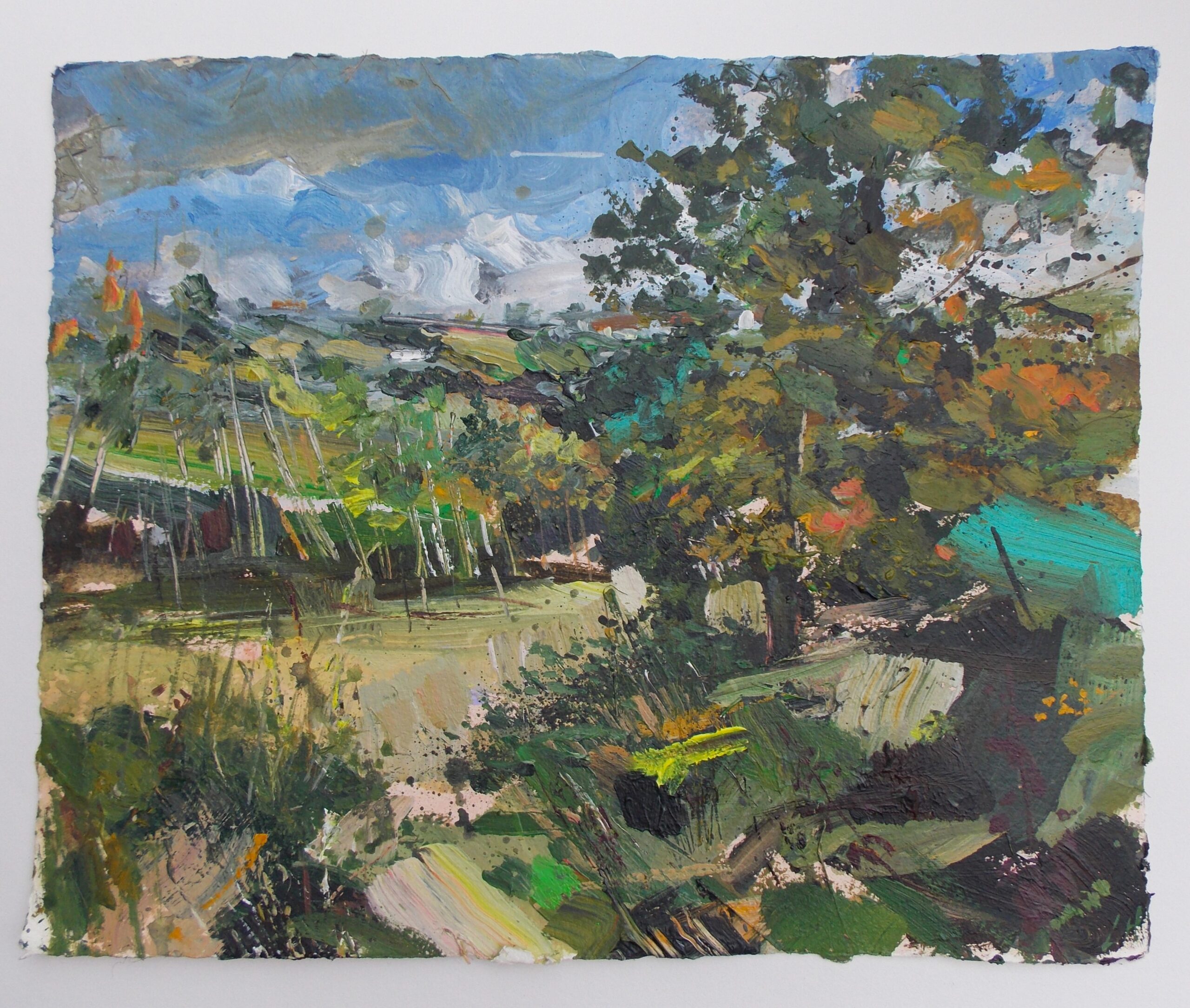
Nick Andrew

Since the mid ‘90s my home and studio have been at Bull Mill Arts on the upper reaches of the River Wylye near Warminster. Most of my work since then has been inspired by the immediate landscape and, in particular, a three- mile stretch of this stunning chalk stream close to my studio, along with adjacent water meadows and nearby woodland. I walk here often, observing and drawing changes from day to day and season to season. In my paintings, I aim to convey a sense of the life, movement and ‘my own ‘solitary involvement’ with this landscape.
I also undertake plein air drawing projects exploring urban and landscape themes. Currently I’m working on a series of pieces depicting the sources, tributaries and confluences of the five chalk streams that flow towards and through Salisbury and that have shaped the landscape of south west Wiltshire. This collection is destined for exhibition entitled ‘Confluence’ in Salisbury in September 2025.
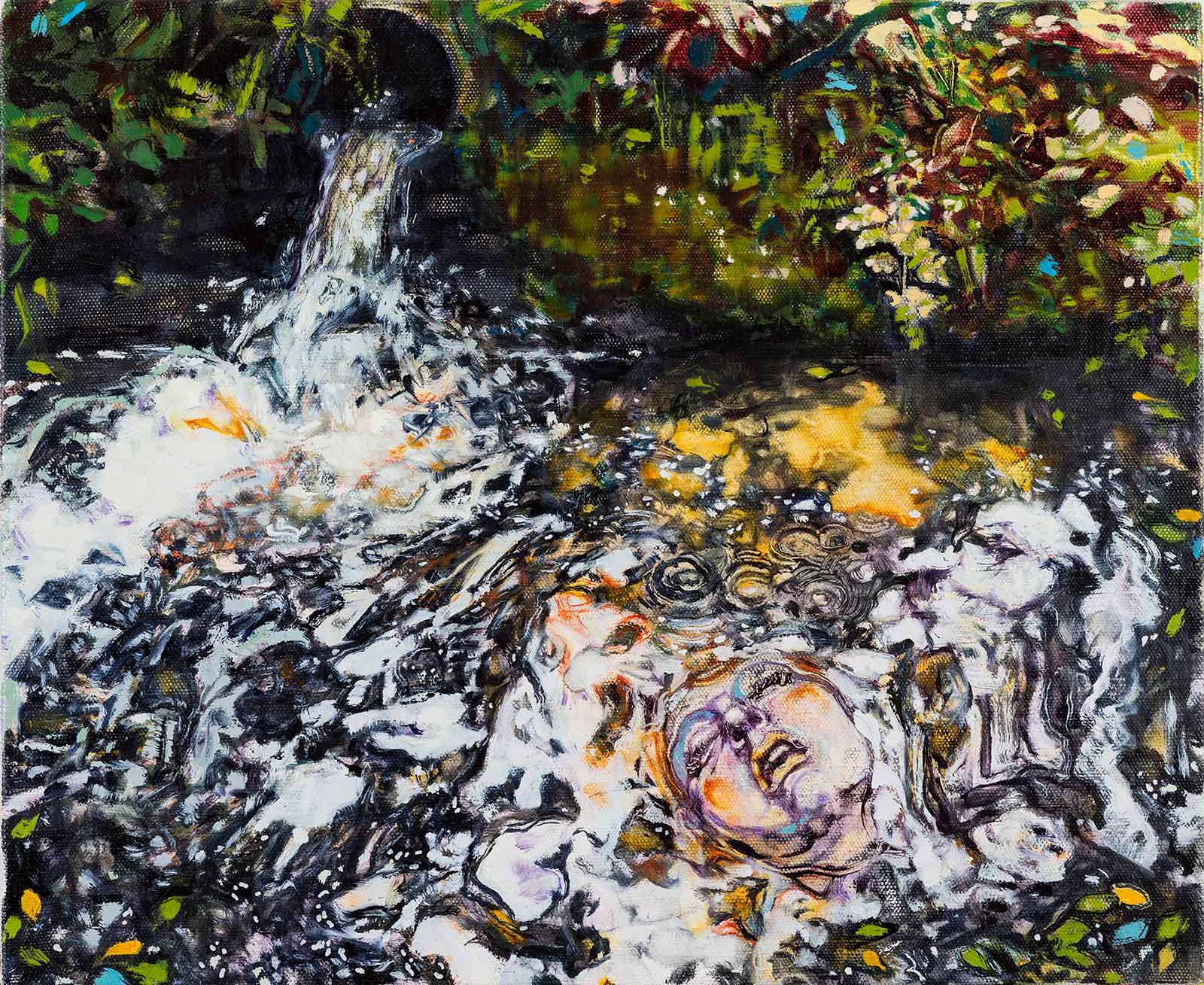
Dominic Shepherd’s painting is vibrant with energy and colour, his human actors are people like us experiencing a mythic world. In his painting keen observation of nature is combined with an individual imaginative visualisation that is related to a narrative tradition of ideas and Art history.
He is associate professor of Fine Art at the Art University of Bournemouth where he acts as course leader for MA Painting.
He has exhibited internationally, with an extensive record of group and solo shows in London, New York, Berlin, Los Angeles, Helsinki, Frankfurt, Munich and Miami and is represented by Charlie Smith London.
We look forward to insights from his illustrated talk on Friday night 19th June.
Kit Glaisyer
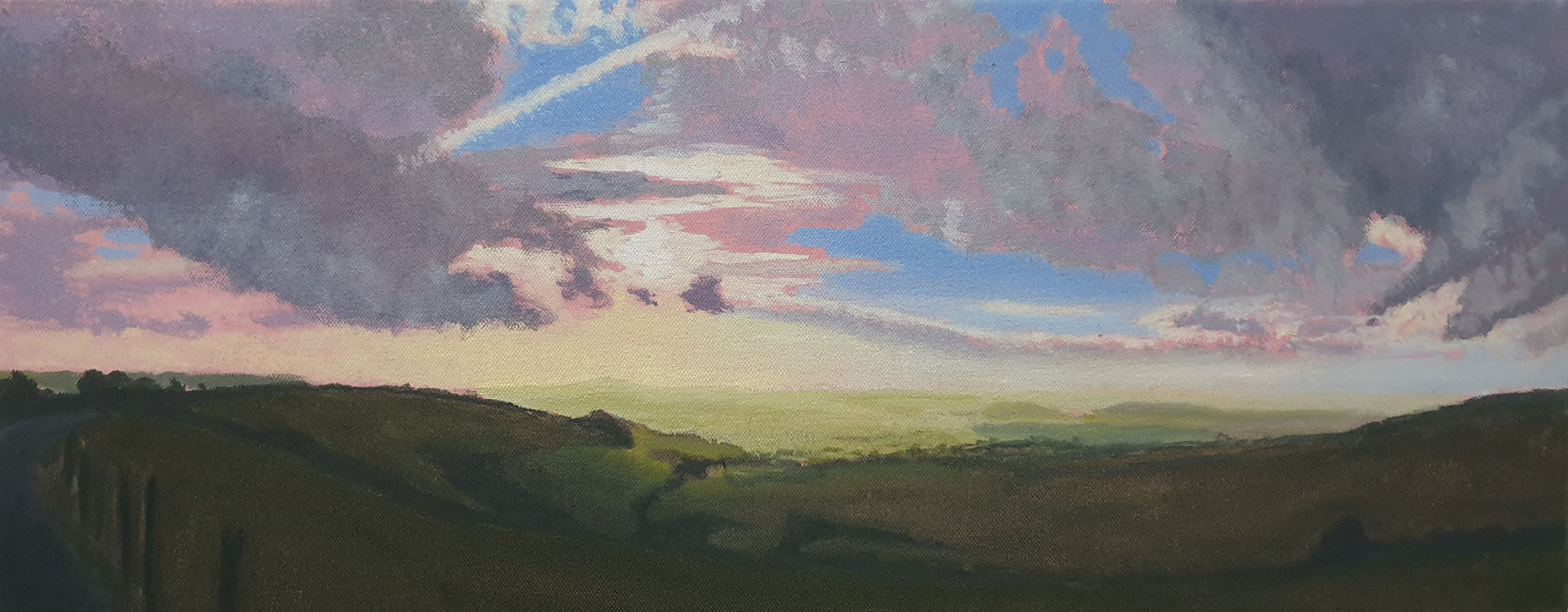
Based at his Studio & Gallery at 11 Downes Street, in Bridport, Kit Glaisyer’s painting process begins with an Impressionist touch, capturing the immediacy of a fleeting moment. He then methodically applies thin paint layers, creating vibrant tapestries of light & colour, a patient approach that harks back to 19th-century European Romantic artists and the British landscape tradition of JMW Turner & John Constable. Kit’s Gallery is open every Saturday from 10am to 3pm and by appointment.
Zoe Roberts
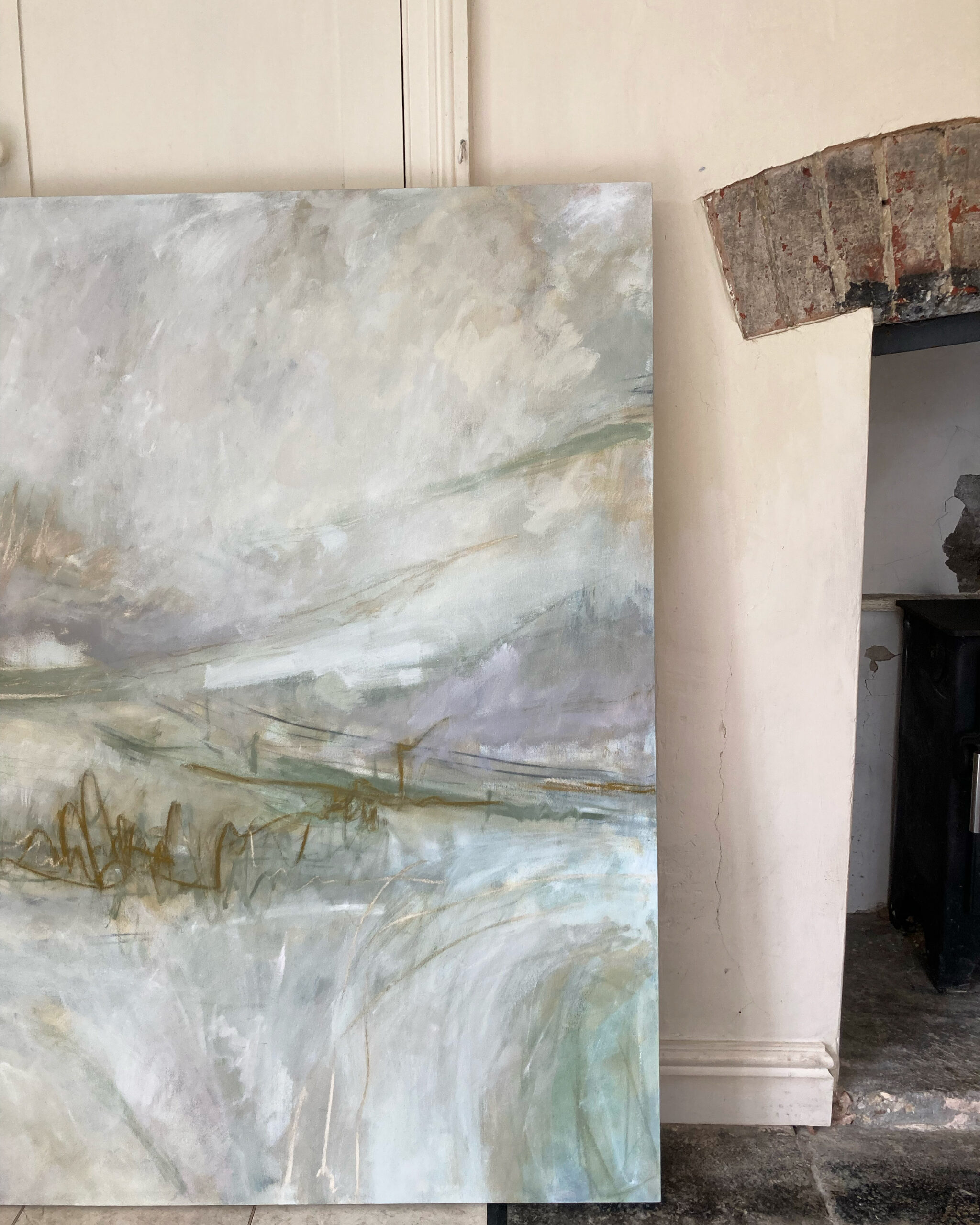
Zoe is an artist and gardener. She studied painting at Edinburgh College of Art and has since moved into horticulture, training at the Royal Botanic Gardens Kew, and now working at Abbotsbury Subtropical Gardens.
Her paintings are a response to landscapes around her — seascapes, mountains, and rural views. She is drawn to the tension between wildness and quiet restraint, creating works that try and find a balance between the two.
Each painting begins through sketching and observation. Zoe builds layers gradually, accentuating elements within the composition until the work becomes an interpretation of place rather than a direct representation.
Moving back to Dorset has encouraged her to look more closely at the forms and shapes within the landscape, and at how human activity, animals, weather, and time changes and reshapes the land around us.